.png)
The New Marketing
Is Marketing the New Strategic Powerhouse?

Fatima Vigil
Marketing strategist and consultant helping startups and scale-ups build efficient growth engines. With over 15 years of experience in product, marketing, and go-to-market strategy.
The Evolution of Marketing
A few days ago, I shared a trendy image showing different action figures representing various marketing roles — each one equipped with their "survival kit." From fatjoe. You probably know the trend I’m talking about.
Someone asked: “What about a full-stack marketer’s kit?”
That got me thinking... it would be nearly impossible to fit all the tools a full-stack marketer uses into one image. And that thought led me to finally write this article — something I’ve had in mind for a while.
When I started my bachelor’s in marketing 20 years ago, the field was often viewed as a support function. Marketing’s role? Make products look attractive and run ads. It even carried a bit of a stigma — often associated with manipulation or “made-up needs.”
But over time, with the rise of technology, digital tools, and data, marketing has transformed. It’s no longer just about promotion — it’s about insight, impact, and driving the business forward.
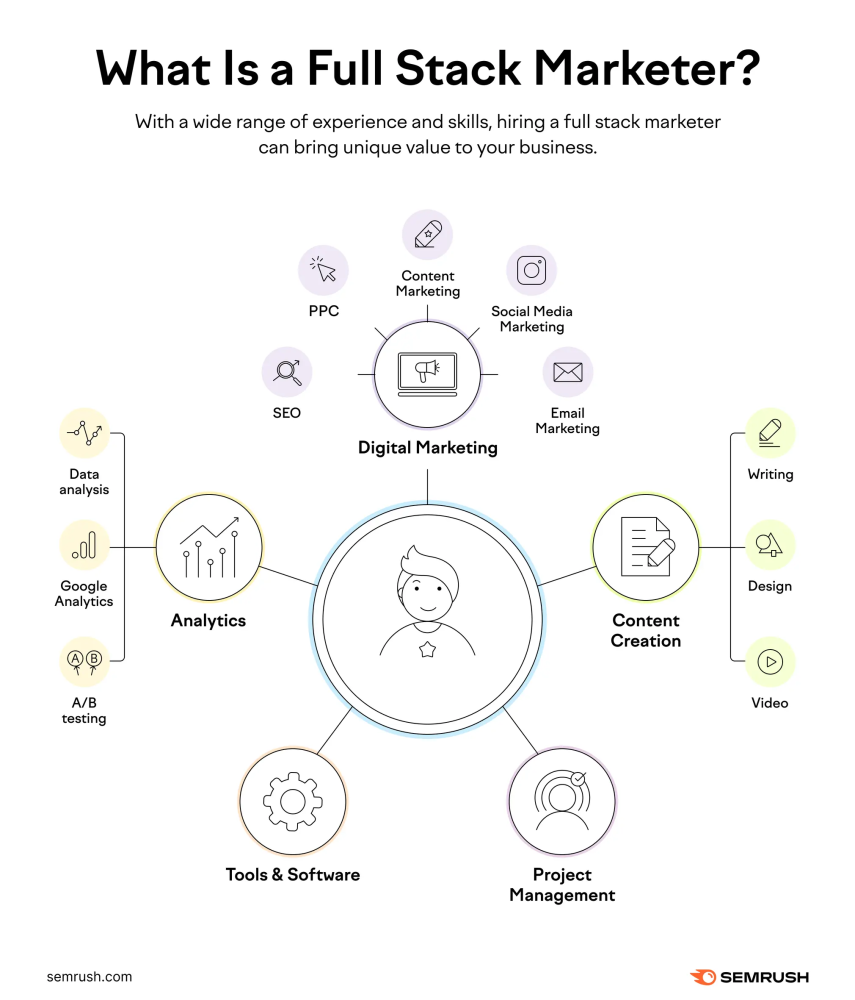
The Full-Stack Marketer: Strategy, Tools & Impact
Today, a full-stack marketer is often the bridge between departments and the engine behind growth. With access to a range of tools, platforms, and data, marketers now have full visibility into the business — and they know how to turn that information into results.
From branding and go-to-market strategy to sales enablement and post-sales engagement, marketing touches every stage of the customer journey:
- Branding: Creating consistent, powerful positioning that sets the tone across all channels.
- Go-To-Market: Defining the right audience, crafting the messaging, and enabling the sales team.
- Sales Enablement & Customer Success: Equipping teams with what they need to convert and retain customers.
- Product Marketing: Translating product features into customer benefits, driving adoption and feedback loops.
But with so much data and so many tools at our fingertips, the challenge isn’t access — it’s focus. In fact, studies show that only around 50% of business decisions are actually based on data, and just half of the available information is used at all. That’s a lot of missed potential. This is where the full-stack marketer comes in — not just as a tool expert, but as someone who knows how to cut through the noise.
To make that kind of impact, it takes more than technical skills. A great marketer today needs to be analytical, open-minded, quick-thinking, and have a critical eye. It's about knowing what matters, spotting real insights, and turning them into strategy — fast.
Are Companies Ready to Elevate Marketing?
So, here’s where the real tension lies:
Do companies truly understand the strategic value of marketing?
Are they ready to trust marketers not just with campaigns — but with company direction?
Are they willing to give marketing a seat at the decision-making table?
While we’re seeing more marketing leaders step into strategic roles, many companies still underestimate what full-stack marketers bring to the table. It’s time to shift that mindset.
Because marketing isn’t just a department anymore — it’s a core driver of business success.
.png)
.png)
.jpg)
.png)


